Essaouira is Morocco's laid-back Atlantic port city — a UNESCO-listed 18th-century medina 2.5–3 hours west of Marrakech, famous for trade-wind surf conditions, blue fishing boats and the Gnaoua music festival.
Key takeaways
- Essaouira's medina has been a UNESCO World Heritage Site since 2001 — an 18th-century fortified town designed by a European engineer for a Moroccan sultan.
- The Atlantic trade winds keep summer around 10°C cooler than Marrakech and make the bay one of Africa's best places to learn surfing, kitesurfing and windsurfing — lessons from $25.
- 33 bookable experiences carry a combined 4,622 verified GetYourGuide reviews — top-rated: surf lessons (4.9★, 519 reviews) and the half-day dunes quad tour (4.9★, 341 reviews).
- Coming from Marrakech? It's 190 km — day trips from $18, shared transfers from $14, about 2.5–3 hours each way past argan-oil cooperatives.
- Essaouira's ramparts played Astapor in Game of Thrones Season 3 — episodes 1, 3 and 4 — and the town hosted Jimi Hendrix in 1969.
- Every June the Gnaoua World Music Festival takes over Moulay Hassan square — the 2026 edition runs June 25–27.
The Experiences
What are the best things to book in Essaouira?
The six standouts across 4,622 verified reviews — each links to live availability and prices on GetYourGuide.
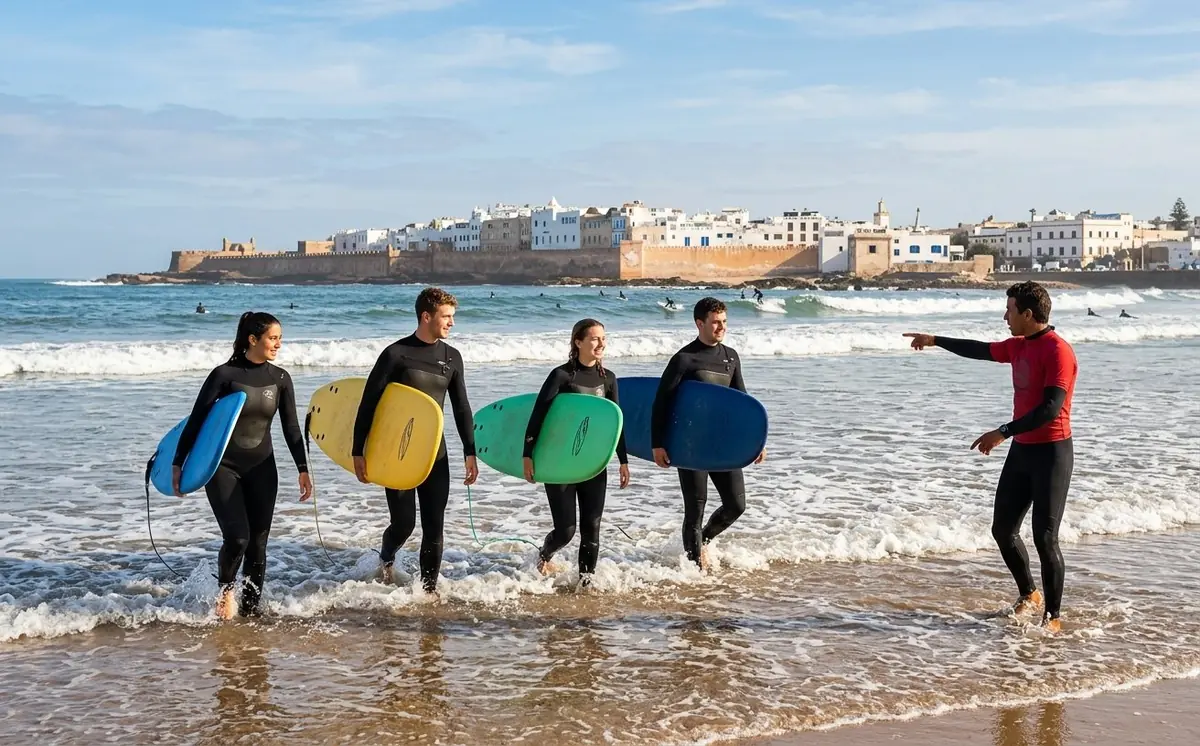
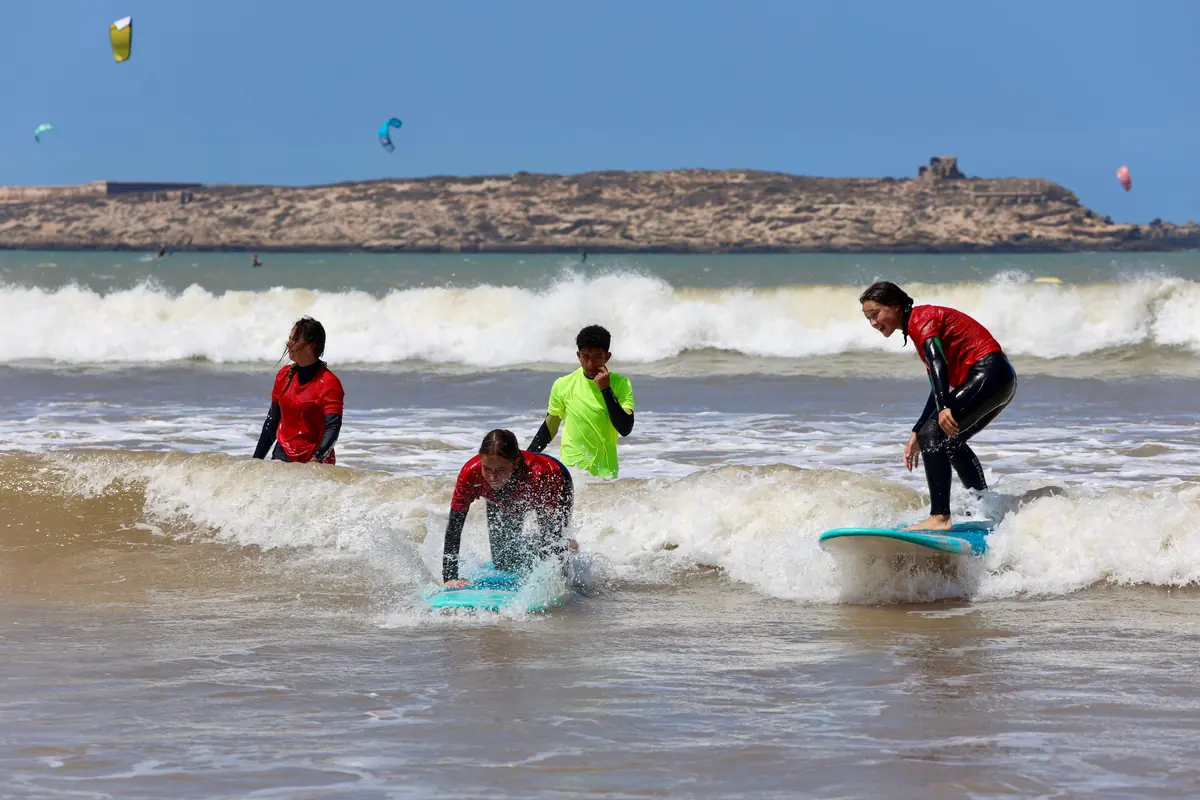
The classic Essaouira Bay surf lesson — 4.9★ across 519 reviews, all levels, boards and wetsuits included.
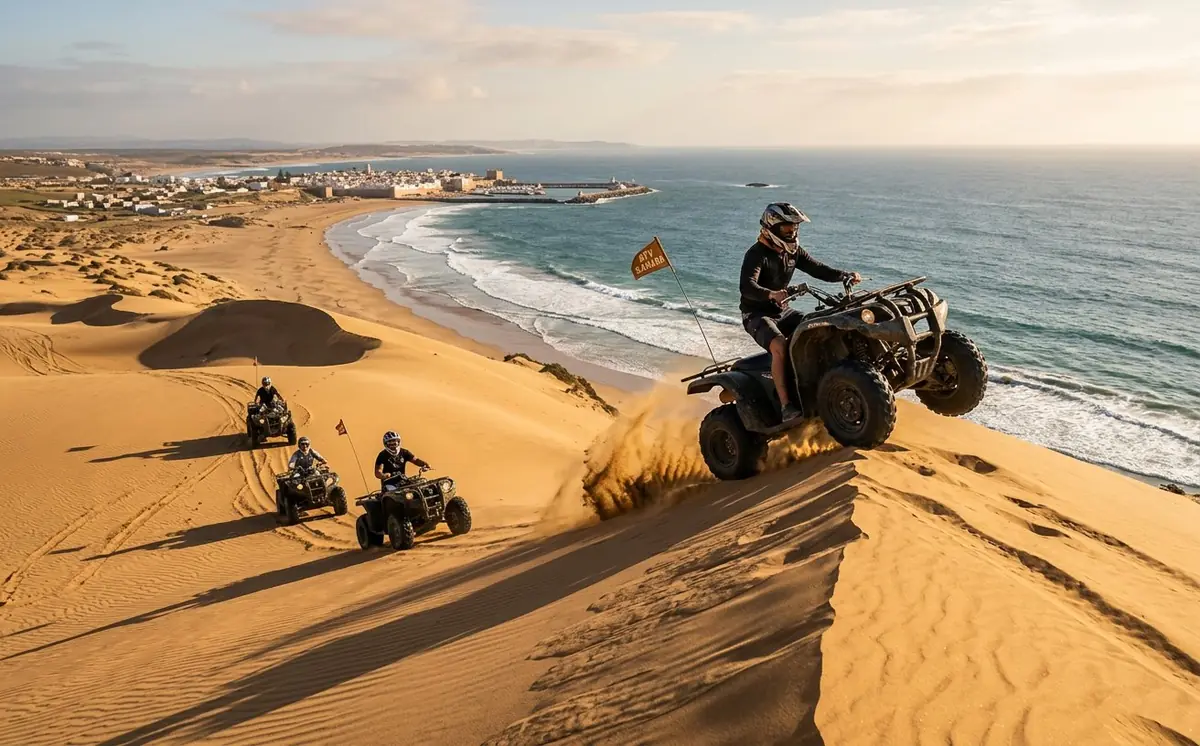
Half a day of dunes, beach and eucalyptus forest on a quad — the highest-reviewed adventure in town.
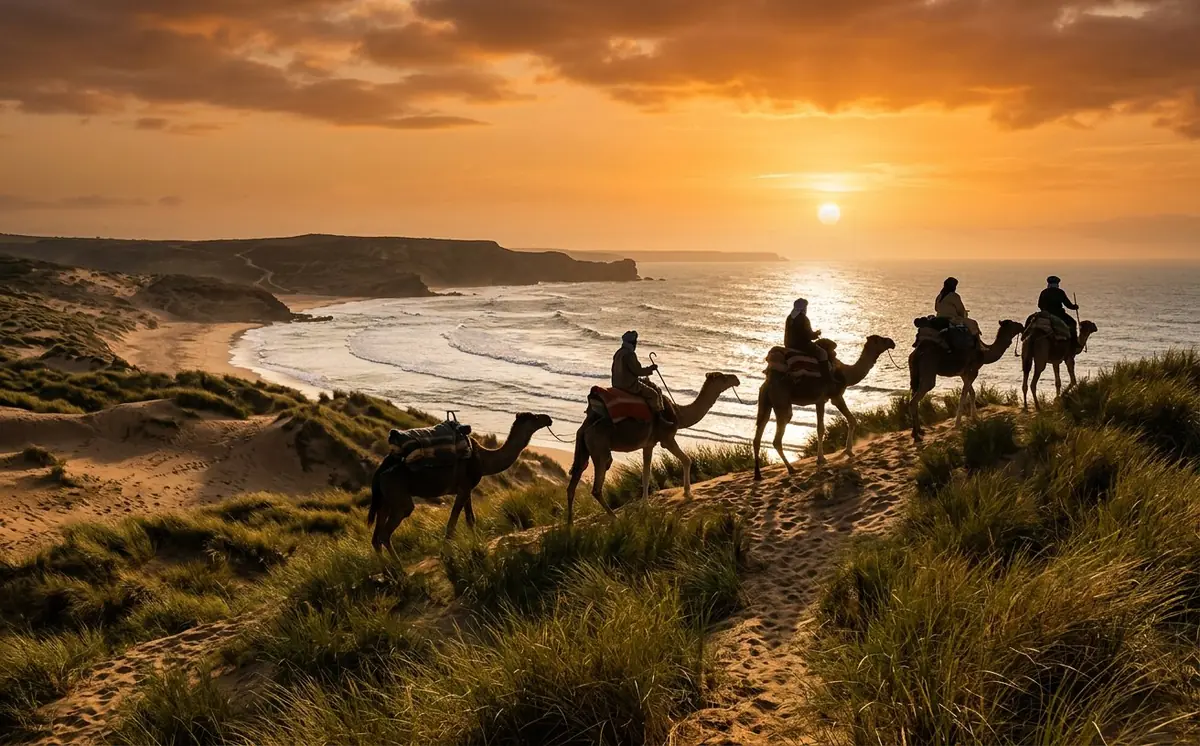
Two hours through dunes and along the shore at sunset — the photo everyone takes home from Essaouira.
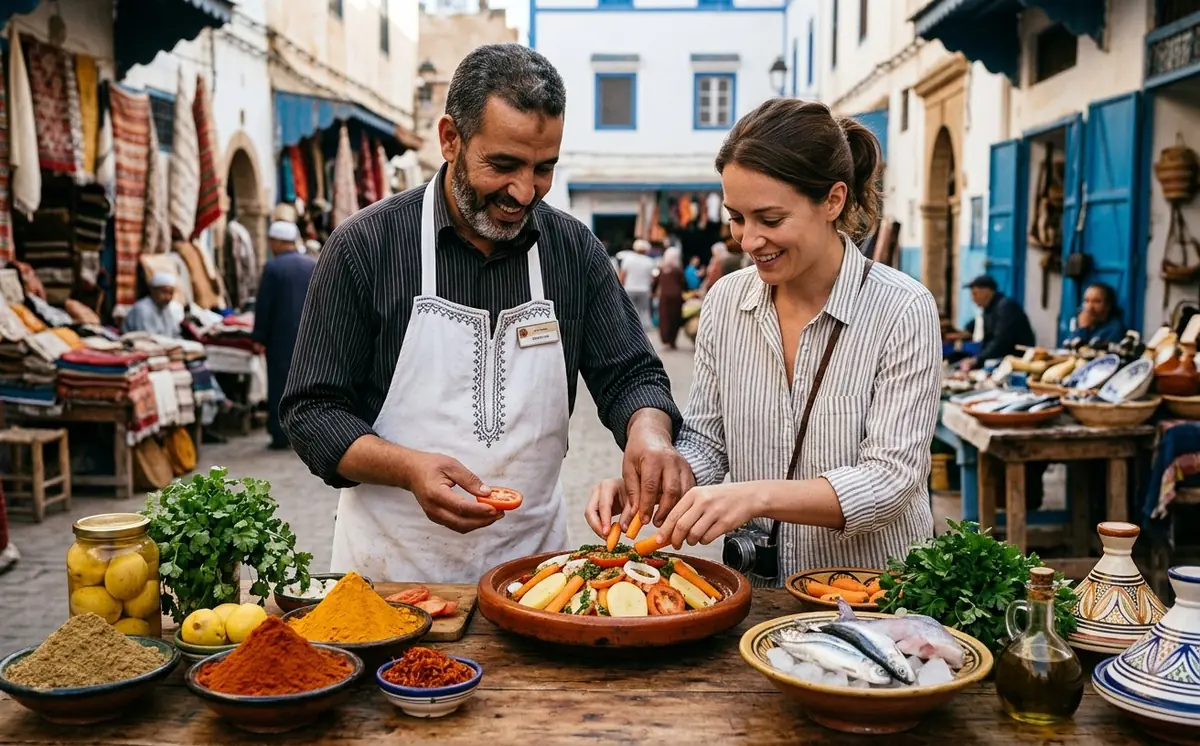
Shop the souk with a chef, then cook a tagine from scratch. A perfect wind-day backup plan.
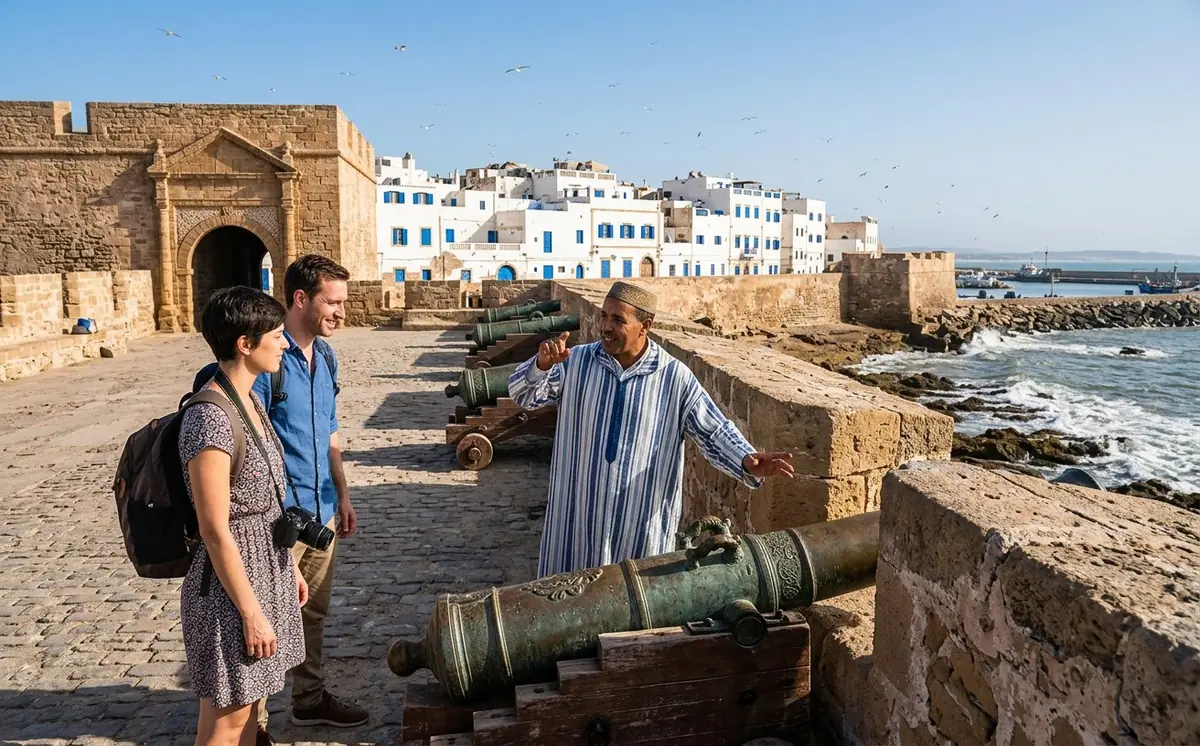
The medina, Skala ramparts, port and Jewish quarter decoded by a private local guide.
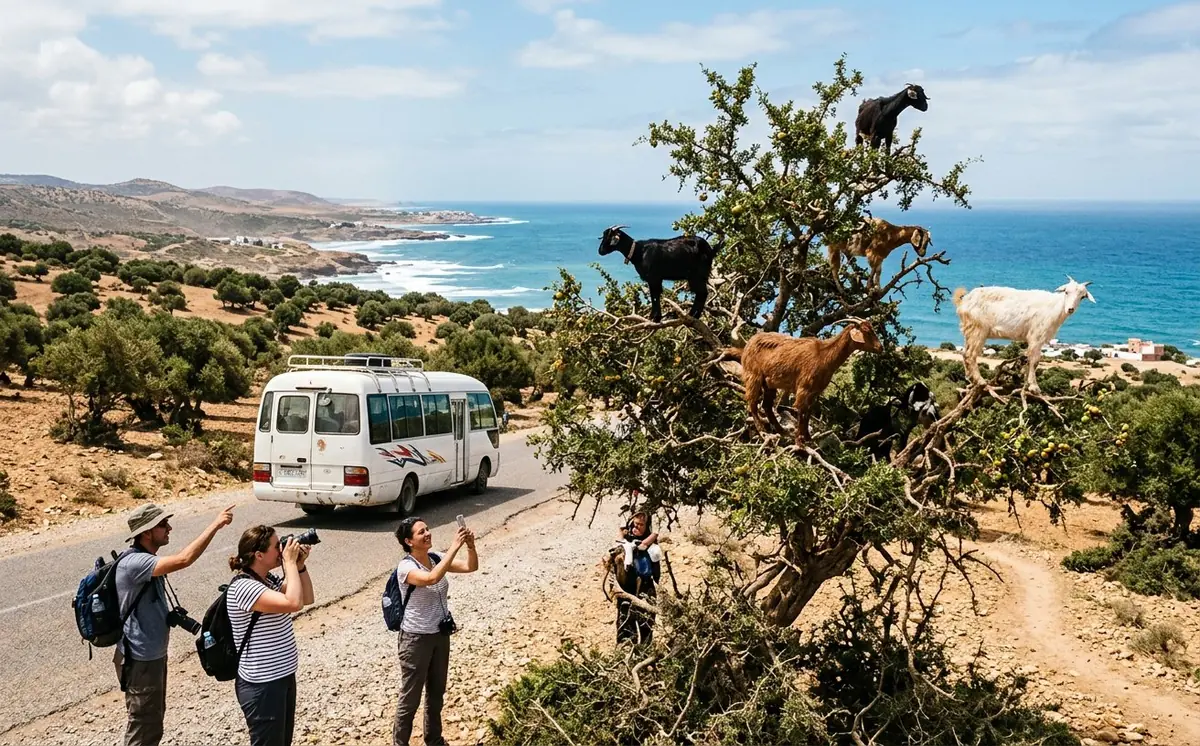
The big one from Marrakech: argan cooperatives, the coast and free time in the medina, from $18.
Through the Lens
Essaouira — Captured
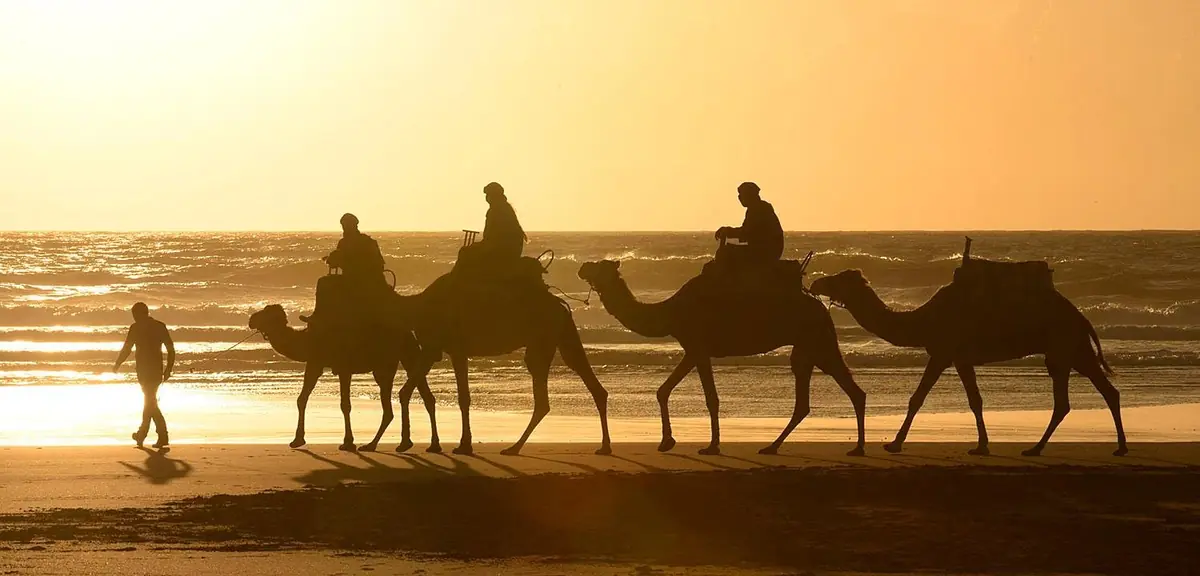
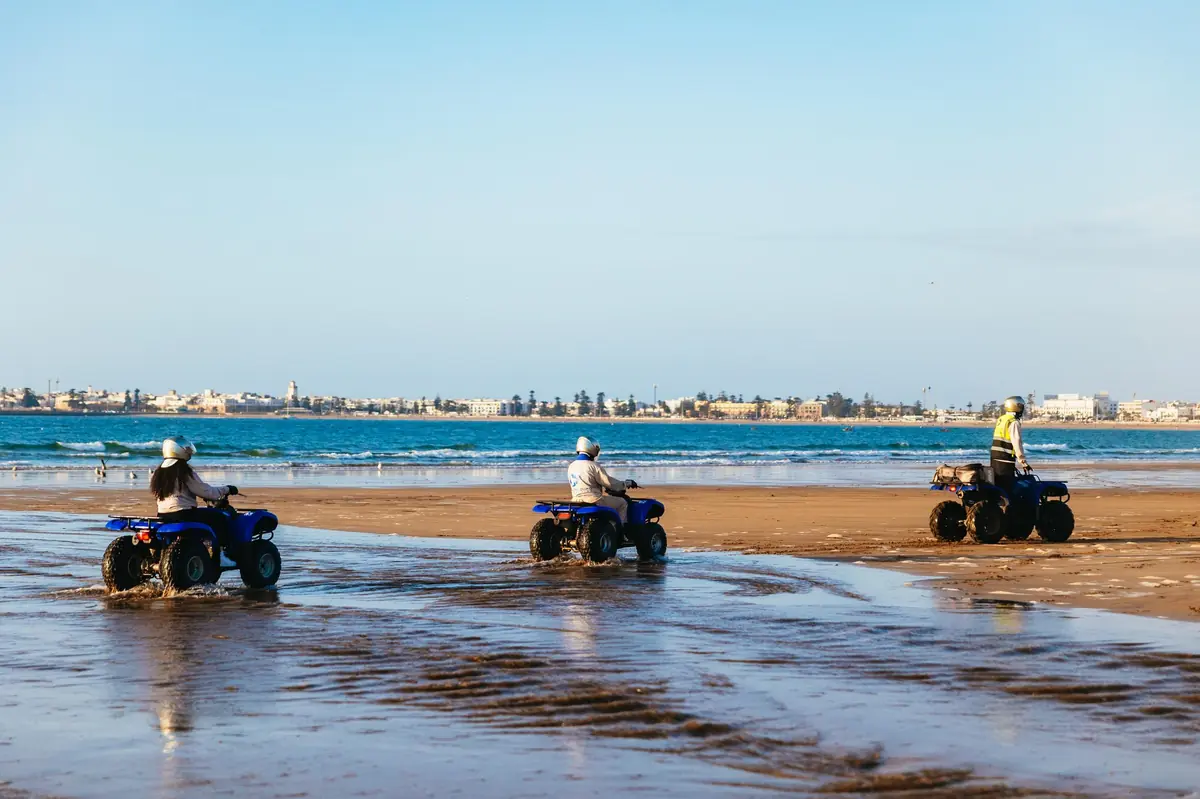
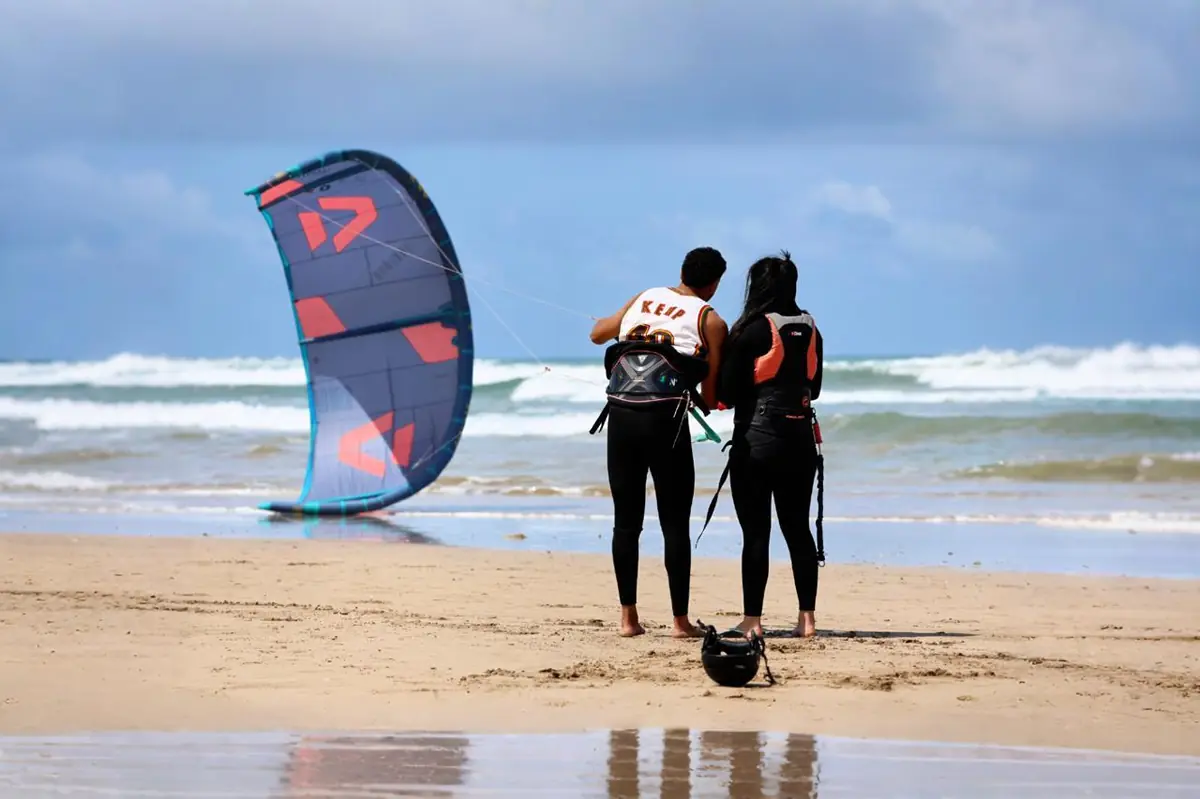
Water, Wheels, or Hooves?
Essaouira Experiences — Which Format Is Right for You?
Three signature ways to spend your Essaouira day. Same coast, very different memories.
Deep dives: our full surf-lesson review, the quad tour reviewed, and the camel ride reviewed.
How should you spend your time in Essaouira?
Essaouira splits neatly into two speeds. Inside the walls: the medina's car-free souks, the Skala ramparts with their bronze cannons, the fish auction at the port, thuya-wood workshops and gallery-lined alleys — all walkable in a morning, ideally with a local guide who can decode it. Outside the walls: a 6-kilometre crescent of beach and, behind it, dunes and eucalyptus forest where the quad bikes, camels and horses run.
The wind decides your schedule more than any guidebook. From April to September the afternoon alizé blows hard and steady — that's when the kitesurfers fill the bay and you want to be on the water, on a quad, or inside a cooking class learning to make a proper tagine. Mornings are calm: medina, port and beach walks belong there. Full month-by-month details are in our weather guide.
Where is Essaouira, and how do you get there?
Essaouira sits on Morocco's Atlantic coast, 190 km west of Marrakech and about 175 km north of Agadir. There's no train; the road from Marrakech takes 2.5–3 hours, passing the argan groves where goats famously climb the trees. Most visitors choose between a guided day trip from $18, a shared transfer from $14, or a private car. Essaouira-Mogador Airport (ESU), 15 km south of town, handles seasonal European flights — a private transfer into town costs about $29.
How do Essaouira's experience categories compare?
| Category | From | Top rating | Best time | Guide |
|---|---|---|---|---|
| Surf, kite & windsurf lessons | $25 | 4.9★ (519 reviews) | Mornings; kite Apr–Sep | Surfing guide |
| Quad bike tours | $29 | 4.9★ (341 reviews) | Any — wind-proof | Quad guide |
| Camel & horse rides | $37 | 4.8★ (287 reviews) | Sunset / low tide | Rides guide |
| Cooking classes | $45 | 5.0★ (215 reviews) | Windy afternoons | Cooking guide |
| City tours | $33 | 5.0★ (41 reviews) | Mornings | Tours guide |
| Day trips & transfers | $14 | 4.8★ (415 reviews) | Book ahead Apr–Sep | Transport guide |
Essaouira by the numbers
Quick facts
The Insider's Guide
The Ultimate Essaouira Travel Guide: Morocco's Windy Seaside Gem
Marrakech is a lot. It's loud, it's hot, and someone is always trying to sell you a rug you don't need. If you've reached your limit with the red city, Essaouira is the reset button. Blue and white instead of ochre, a town that feels more Mediterranean village than Saharan outpost — and the air actually moves here. Usually, it moves a lot. They call it the "Wind City of Africa" for a reason. You don't come here for a tanning session; you'd just get sandblasted. You come here to breathe.
A City Built on Purple and Trade: The Story of Mogador
Before it was Essaouira, it was Mogador. Long before the surfers showed up, Phoenicians and Romans harvested sea snails off the nearby Îles Purpuraires — the Purple Islands — to make the royal dye that clothed emperors. A messy, expensive business.
The city you see today was the 1760s brainchild of Sultan Sidi Mohammed ben Abdallah, who hired French architect Théodore Cornut — a student of the military engineer Vauban — to design his "royal port." That's why the place feels so strangely organized: instead of the usual Moroccan labyrinth, you get a grid. Moroccan in soul, European in bones. For centuries this was the "Port of Timbuktu," the end of the line for Saharan caravans hauling gold, ivory and ostrich feathers toward Europe.
Why Essaouira Should Be on Your Morocco Itinerary
Most people do Essaouira as a rushed day trip. That's a mistake — stay two or three days. It's the vibe that matters here, not a monument checklist. The medina is a UNESCO site, sure, but it's the lack of motorbikes that makes it special: you can actually walk without a moped clipping your elbow.
It's also cheaper than Marrakech, the dirhams go further, the vendors take a first "no," and there's a layered mix of Berber, Jewish and European history you can feel in the walls. Lately it's a digital-nomad hub too — the rooftops with Atlantic views beat any office cubicle. We make the full case (and the honest counter-case) in Is Essaouira worth visiting?
How to Get to Essaouira: From Marrakech and Beyond
Getting here isn't complicated. Most people come from Marrakech — about three hours by road, no train. Supratours buses leave from beside the Marrakech train station and drop you at the edge of the medina; CTM's station is a ten-minute walk further out. Organized day trips run from $18 and one-way transfers from $14 — the comparison is in our transport guide. Groups can hire a grand taxi: faster, pricier, and you can stop when you spot the goats standing in the argan trees.
Pro tip — be skeptical of the goats. They genuinely climb the trees to eat the fruit, but some farmers now "perch" them there for tips. If the goats look staged and there's a man with a hat nearby, it's a photo op, not nature. Wild herds happen away from the main road.
Flying from Europe? Essaouira-Mogador (ESU) is a tiny airport 15 km south — immigration takes two seconds, and a private transfer into town runs about $29.
The Port, the Square, the Art and the Movies
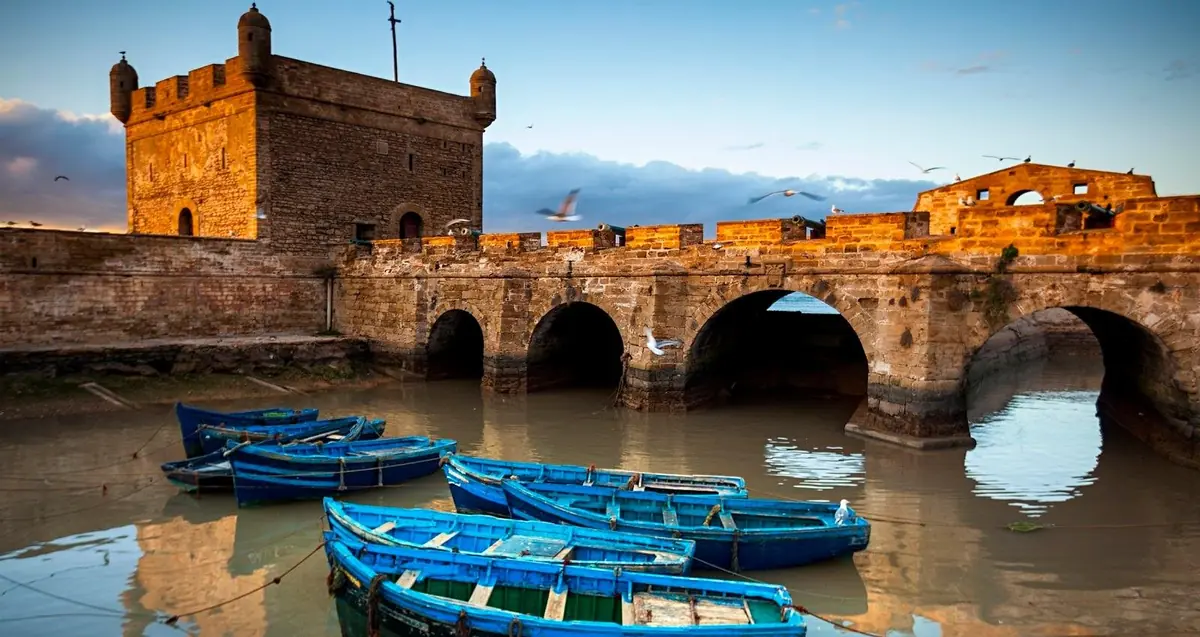
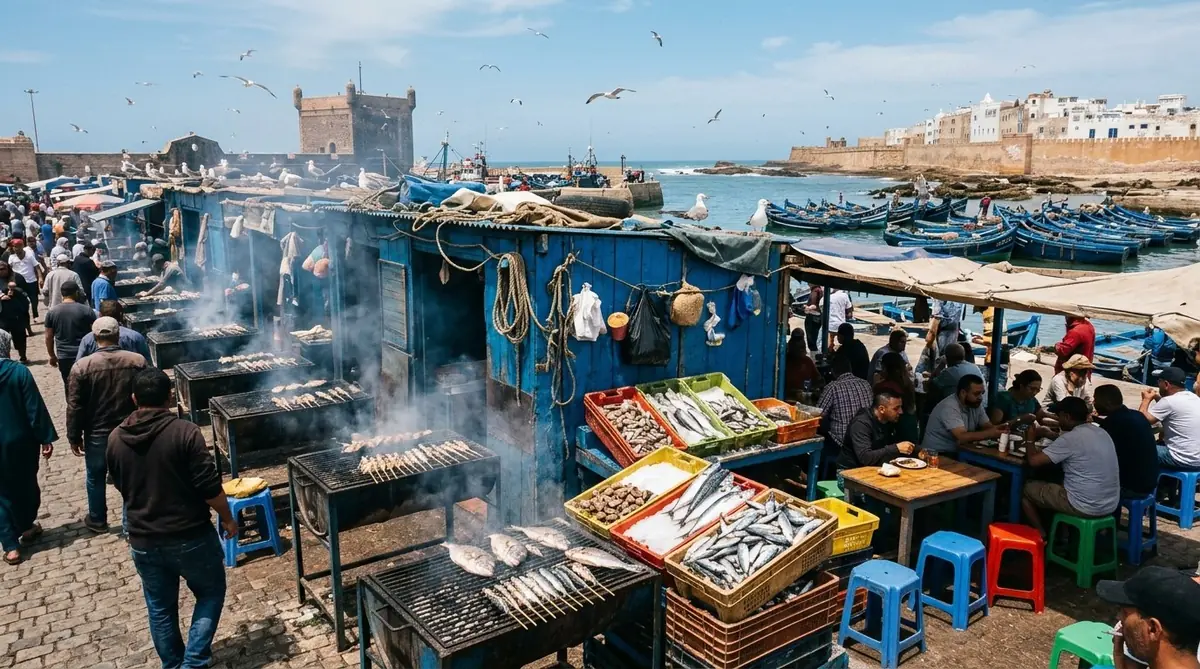
The port is the soul of the place — a loud, blue-painted chaos of wooden boats and fishermen mending nets. It smells like salt and guts. Walk through the Porte de la Marine and just watch the spectacle. Then drift to Place Moulay Hassan, the big square where everyone drinks mint tea and watches the world go by. (The ranked list of everything worth your time is in things to do in Essaouira.)
The art: Essaouira has its own "Naive" art scene — colorful, surreal, fed by Gnaoua spirits and legends. Galerie d'Art Damgaard near the clock tower, the town's first gallery (opened by a Dane in the 80s), is packed with local legends like Mohamed Tabal. Worth a look even if galleries aren't your thing.
The movies: this city is a screen veteran. Orson Welles filmed Othello here in 1949 — there's a Place Orson Welles by the sea walls — and it later stood in for Jerusalem in Kingdom of Heaven, appeared in John Wick: Chapter 3, and of course played Astapor in Game of Thrones Season 3. The Old-World vibe is so strong directors barely have to dress it.
The Silent History of the Mellah: Essaouira's Jewish Heritage
One of the most moving corners of the city is the Mellah, the old Jewish quarter. In the late 1800s Essaouira was roughly 40% Jewish — one of the few places where Jews and Muslims lived in such close, peaceful proximity, and many houses still carry the Star of David carved above their doors.
Much of the quarter fell to ruin after the community emigrated in the 50s and 60s; a major restoration is now underway. Visit Bait Al Dakira — the House of Memory — a museum and synagogue documenting that co-existence. Quiet, respectful, and a necessary break from the souks. A guided city tour adds the narration the stones can't give you.
Walking the Skala de la Ville
The Skala de la Ville is the massive sea wall built to keep out pirates. Walk the top, peer through the old cannons, watch the Atlantic smash against the rocks below. Spectacular at sunset — just hold onto your hat. Seriously. Many a fedora has died a watery death up there, and it happens fast.
Kitesurfing and Water Sports: Embracing the Atlantic Winds
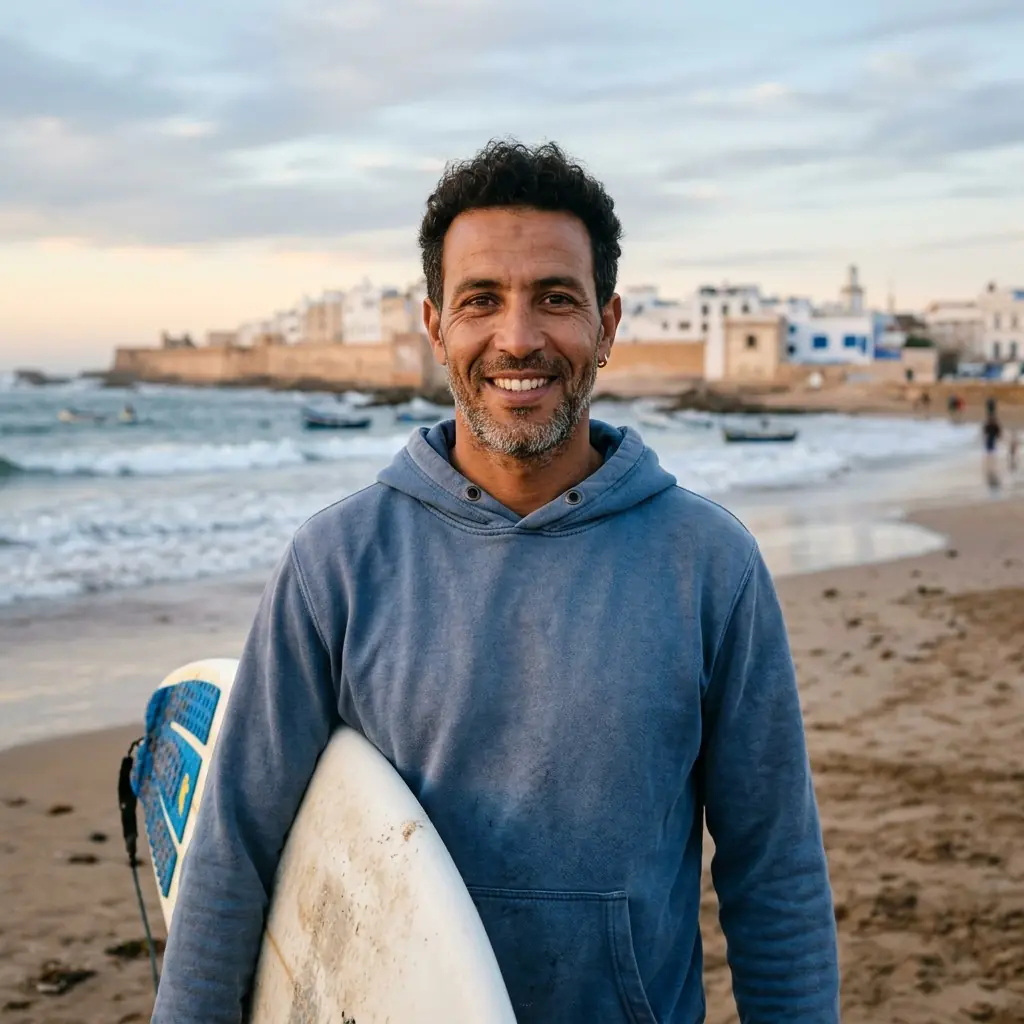
The beach is massive and the alizé trade winds blow most of the year, making this a world-class kitesurf and windsurf arena. Beginners get suited up in thick wetsuits — the water is genuinely cold — and taught, primarily, how not to drown. Lessons run from $25 for surf and $68 for kite; the 4.9★ benchmark class gets the full teardown in our surf lessons review. Even dry, watching the kites dance against the grey Atlantic is hypnotic — more on conditions in the beach guide.
Beyond the Walls: A Day Trip to Sidi Kaouki
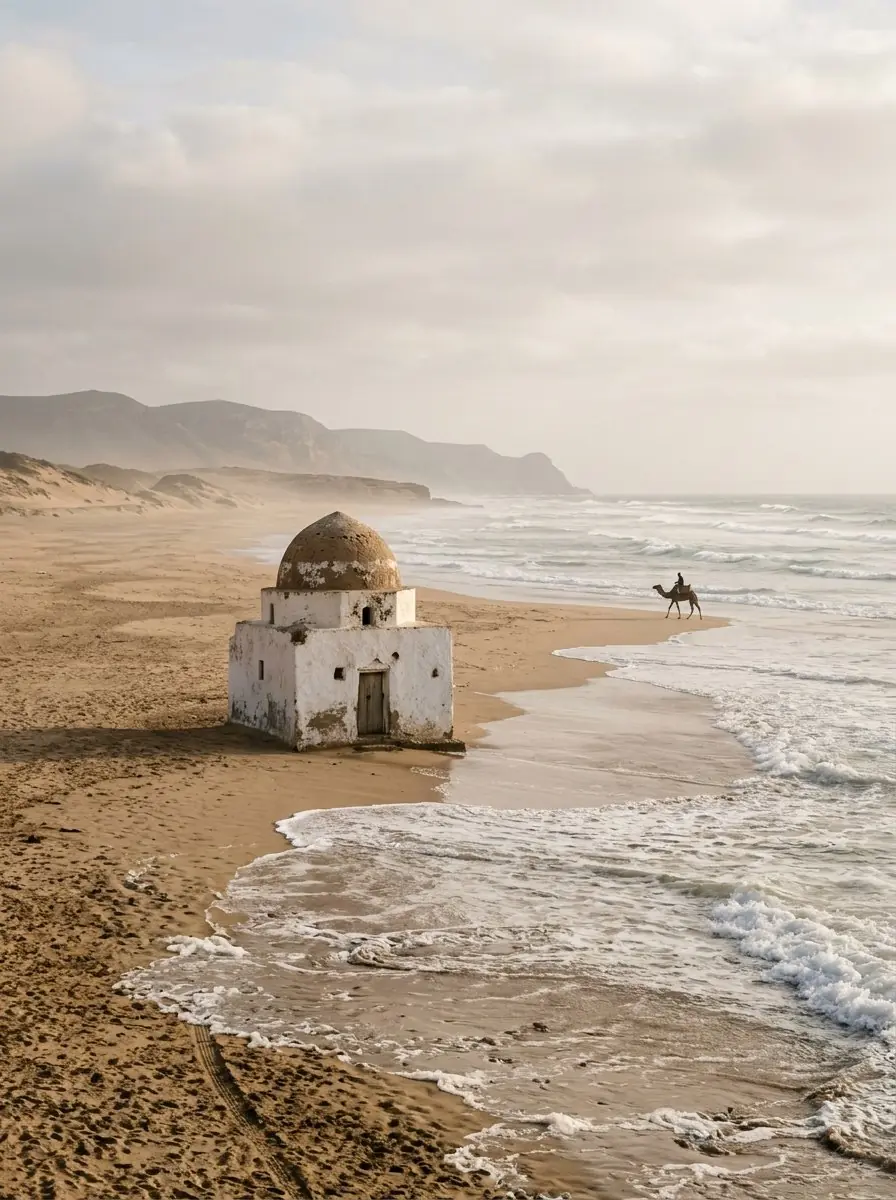
If the medina gets too "busy" for you, head 25 minutes south to Sidi Kaouki — a tiny, dusty surf village that feels like Essaouira did 30 years ago. A white marabout shrine stands on the beach and gets cut off by the tide; the waves are better for surfing than the city beach.
Take a local bus or grand taxi for a few dirhams, walk the wild beach, have a roadside tagine, watch the camels wander past. It's the ultimate chill day trip. Honestly, there isn't much else to do there but stare at the ocean — which is the point.
The Best Time to Visit: Weather and the Gnaoua Festival
Spring (April–June) and autumn (September–October) are the sweet spots: mild weather, manageable wind. The month-by-month tables — wind calendar included — are in our weather guide.
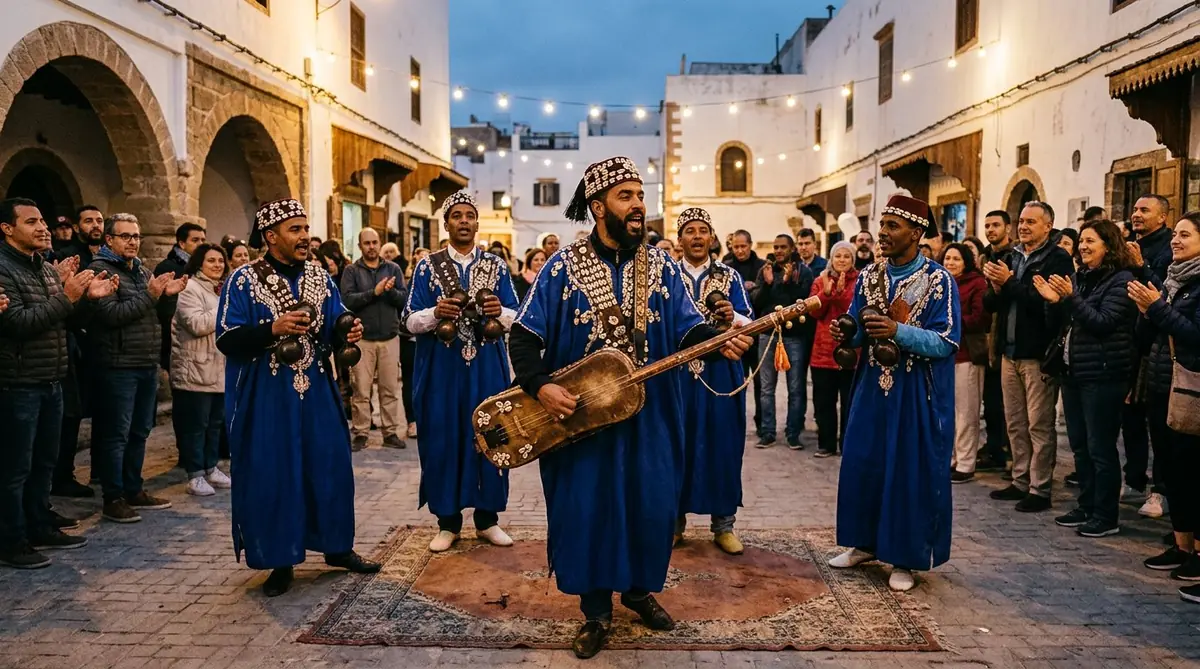
If you can, time your visit for the Gnaoua World Music Festival in June — the Woodstock of Africa (June 25–27 in 2026). The city becomes one open-air concert, the trance-bass of the guembri rolling out of every square. Spiritual and loud. Beds book up months ahead.
Where to Eat: From the Fish Stalls to the Rooftops
Don't eat a big breakfast if you're heading to the port. By the entrance, dozens of blue-shack stalls grill whatever looks fresh — sardines, sea bream, calamari, the occasional giant spider crab — with nothing but salt, lemon and bread. Plastic stools, screaming gulls, the most honest meal you'll have in Morocco. Agree the price before the fish hits the coals; you pay by weight.
For dinner: Taros on the main square has the rooftop and the booze license (go for the view); La Table Madada does refined seafood pastilla in an old carob warehouse; Triskala Café is the cozy vegetarian-friendly pick; and Patisserie Driss has been doing coffee and pastry since 1928. On the street, hunt down amlou — argan oil, honey and almonds, "Berber Nutella" — and the spiced sardine kefta sandwich. Reservations: only Taros and La Table Madada really need them — book a day ahead in season, online or through your riad; everywhere else, just show up. Want to cook it yourself? The 5.0★ cooking class starts in the same souk.
Where to Stay: Riads and Boutique Hotels
Stay in the medina, in a riad — an old house wrapped around a courtyard. Salute Maroc is a riot of color and tilework; Villa Maroc, one of the first riads here, is classic whitewashed elegance; Heure Bleue Palais is the luxury play with a rooftop pool; and Atlantic Hostel covers the budget end with a legendary rooftop and social vibe.
Want the sand at your door instead? The hotels with direct beach access line the bay just south of the walls — Le Médina Essaouira Thalassa (MGallery) and Atlas Essaouira & Spa are the established beachfront picks, both with pools and spa floors. Groups should look at renting a whole riad: most medina houses sleep 6–12 across their rooms and rent as a unit, which usually undercuts booking the rooms separately.
Hammams, Thuya Wood and What to Buy
You can't come to Morocco and skip the hammam: steam, black soap (sabun beldi) and a sandpaper mitt (kessa) that leaves you feeling like a new human. Hammam Essaidi is the real, local, ~20-dirham experience; Azur Spa and Spa Chorouk do the gentler Western version with the same traditional products — both take online bookings, or your riad will arrange it.
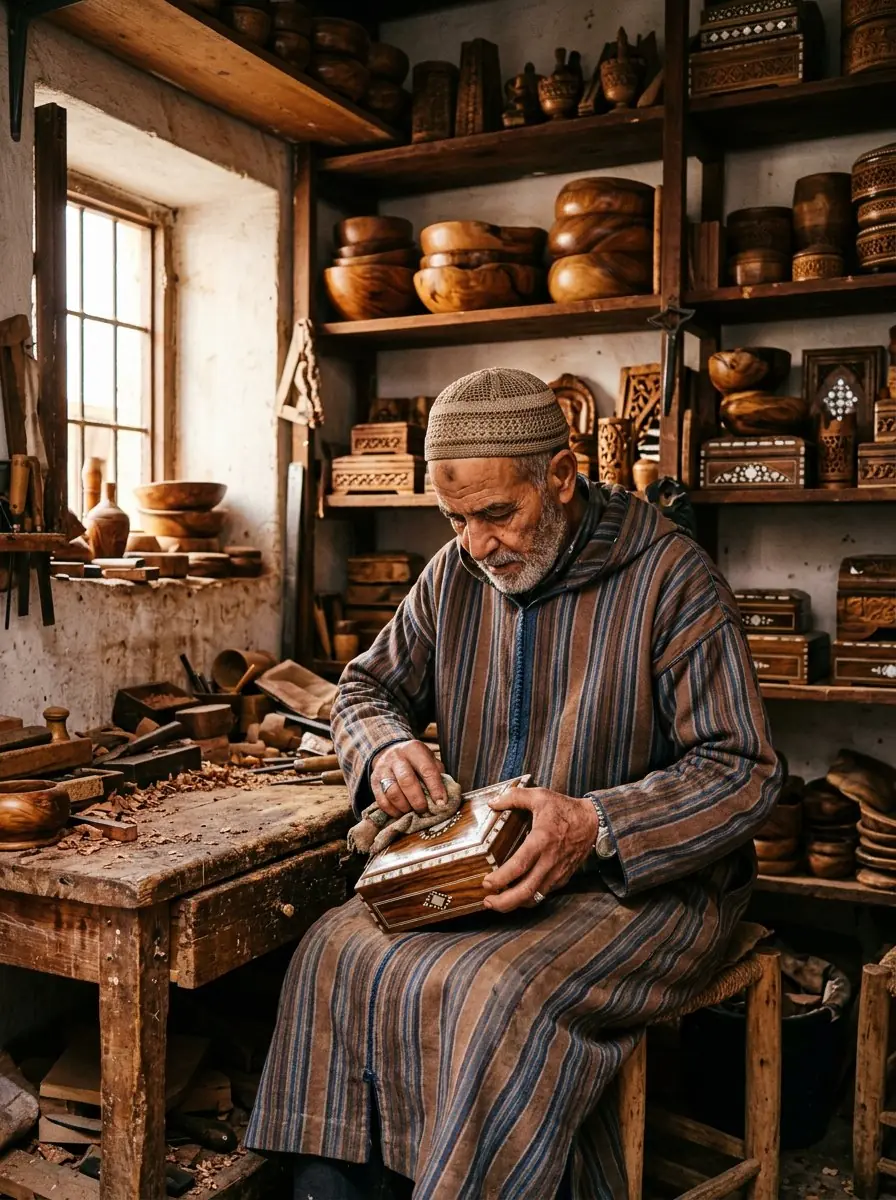
You'll smell the thuya wood before you see it — cedar-and-pepper — and the woodworkers here are wizards with inlay. It's the thing to buy. Also: blankets with the chunky pompoms, and argan oil from a reputable cooperative like Coopérative Marjana. If it's too cheap, it's probably fake.
Buying from home later? Skip the generic marketplaces — Moroccan artisan platforms like Anou, which is owned by the cooperatives themselves, ship genuine work abroad. For argan oil specifically, in-person from a cooperative remains the only purchase you can fully trust.
Essential Tips and the Perfect One-Day Itinerary
The essentials: bring a jacket — even summer evenings are chilly off the sea. Cash is king, and the ATMs around Place Moulay Hassan run dry on festival weekends. Alcohol isn't everywhere; look for the bigger rooftops or Le Chalet de la Plage. Navigation needs no special app — download the offline Google Maps area (or Maps.me) and remember the medina is a grid; you can't stay lost for more than three turns. The cats are everywhere too — friendly and well-fed. And if you want the blue-boats photo without 500 other tourists in it, be at the port by 7:30 AM.
Only got one day? 10:00 port and fish auction → 11:30 Skala de la Ville → 13:00 lunch at the fish stalls → 14:30 medina and Bait Al Dakira → 16:00 Galerie Damgaard → 17:30 sunset on the sea wall with a cone of roasted chickpeas → 19:00 bus back. The fuller version — with the bookings that fit a day trip and those that don't — is in our day trip review.
Honestly, Essaouira is just a mood. Rough around the edges, the wind never really stops — and that's why people love it. It feels real. It's not a theme park. It's a windy little town on the edge of the world… and it's perfect.
Ready to Plan?
Use the comparison table above to pick your experience, or start with the full ranked list of things to do.
See All 12 Things to Do →FAQ
Essaouira: frequently asked questions
Is Essaouira, Morocco worth visiting?+
How many days do you need in Essaouira?+
What is Essaouira famous for?+
How do I get to Essaouira?+
Can you swim at the beach in Essaouira?+
Do you need a travel agency or tour package for Essaouira?+
Is Essaouira cheaper than Marrakech?+
Methodology: prices, ratings and review counts on this page are GetYourGuide's verified figures for all 33 Essaouira-area experiences we track, checked June 2026. Travel facts are cited to primary sources (UNESCO, festival organizers).